

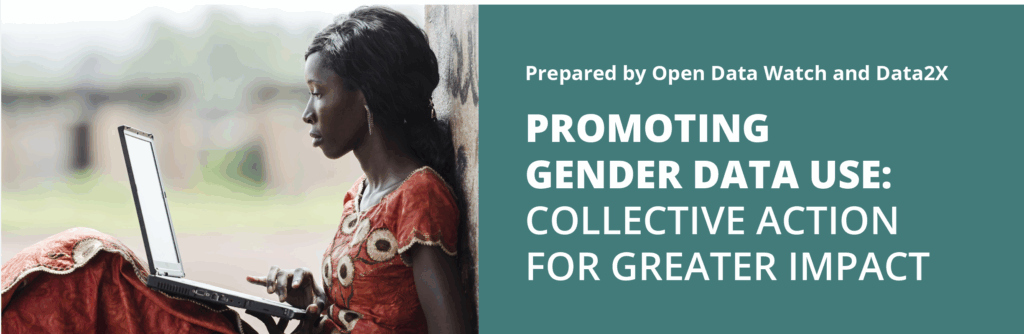
Gender data are shaping policies and actions around the world, but collective action is needed to achieve their full impact.
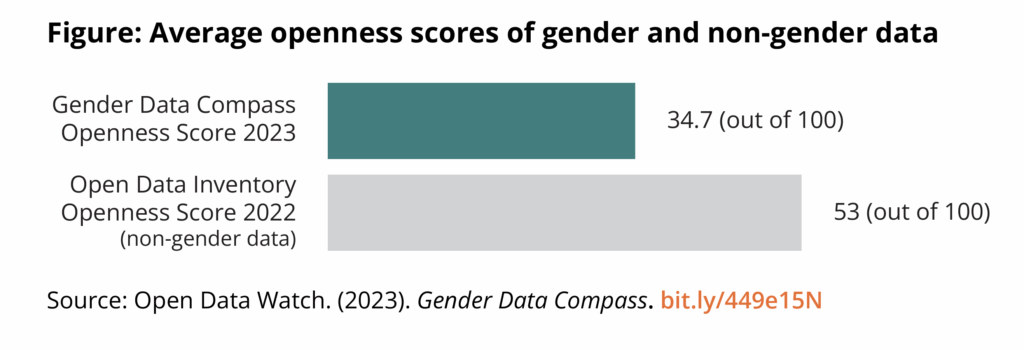
The importance of data that document the realities facing women and girls is already visible. In Vietnam, data on violence against women have informed national action plans and campaigns. And in Finland, data showing disparities between how men and women spend their time have informed policies on parental leave, childcare, domestic services, and rural women’s employment.
This brief shares examples of how a wide range of stakeholders can collaborate to help put gender data to use – from improving usability to policies, capacity, and funding. And it distills how they can enable that use.
KEY MESSAGES:
- Demonstrating the impact of gender data use is key. As their full potential becomes more apparent, this will further strengthen efforts to enable use.
- Policies, such as data sharing policies, can promote gender data use, but their implementation and everyday practices are what create real change.
- Building capacity to use gender data and understand gender issues allows more people to use their skills to turn data into action.
- Providing data that is fit for purpose and in open formats will ensure that available gender data can be used.
- Funding from national and international sources makes these support efforts possible when they target and promote gender data use.
- All stakeholders must work together to promote and entrench gender data use.
The publication of gender data does not result in automatic use.
What do we mean by gender data use?
Just as gender data production involves a range of processes, so does its use. The processes of collection and publication are well understood. But the uptake and impact stages are often ignored or assumed to be self-fulfilling. What do each of these stages and their processes entail?
The data value chain visualizes the processes of data production and use.
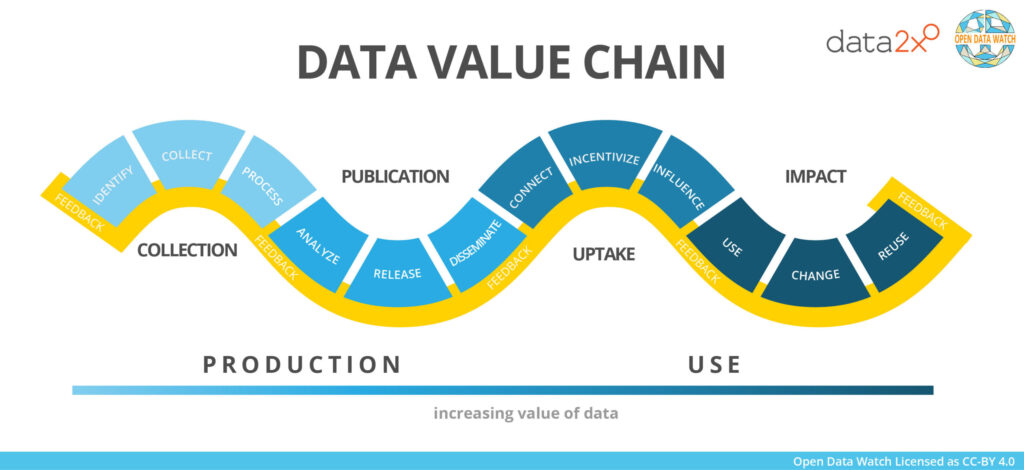
When gender data are used to write a report or develop an app to connect others to the data, this is “use for uptake.”
Uptake involves connecting users with gender data and making data use easier. Once data are available (collected and published), connecting users with them can take many forms such as disseminating a report that someone will use to inform a decision. It can involve developing an app that transforms the data into a more accessible format. Making data uptake easier involves reducing the cost and increasing the value of its use. Data literacy training can encourage effective use. And promoting a culture of data use stimulates further use.
When using gender data results in change, this is “use for impact.”
Impact happens when gender data use informs a decision, alters a condition, or improves well-being. A wide spectrum of efforts is needed across the uptake stage to reach this point. What defines data use here is its connection to change. Advocates use a report to design policies that result in more equitable resource allocation. Citizens use an app that puts crucial information at their fingertips to inform their choices. This is what makes all the time, effort, and resources worthwhile. And through this stage, we arrive at re-use, which reflects the systemic, habitual use of gender data.
Collective action to enable gender data use
The experience of many countries demonstrates that promoting gender use requires the collective action of many actors and stakeholders.
Data producers make available data usable, and their involvement in promoting data use is crucial. They partner with user groups to build the awareness and capacity they need. And they maintain open feedback loops to inform better data production and build trust.

Decision-makers promote a culture of data use. They create opportunities to build capacity and reward use in practice. And they can cement these practices by establishing policies that mandate data use. Implementing both the letter of the law and the spirit is crucial for use.

Advocates make the case for strong use policies and practice. They call for and take part in capacity building and then put that capacity to use for uptake and impact. And they make the case for the funding necessary to sustain gender data use activities.
Funders serve the crucial role of providing resources to support gender data use. They emphasize the importance of data use and motivate building systems that encourage better data use. They fund user feedback, better websites, and adherence to open data principles.
A single person could serve in more than one of these roles. And these roles are found across all sectors.
Figure 1: The two layers of opportunities to support gender data use
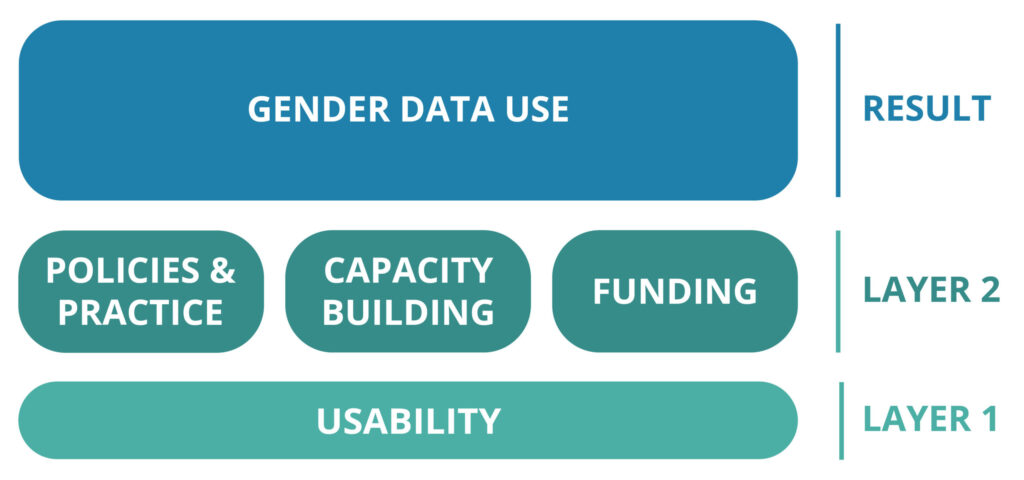
Many opportunities exist for different stakeholders to support gender data use. As the figure shows, these opportunities can be understood in two layers. First are efforts towards improving usability to ensure that available gender data are fit for purpose and open for use. Second are policies and practices, capacity building, and funding. The combination of these efforts support gender data use for impact.
The following sections explore the opportunities in these layers and share examples from countries around the world.
Usability: Producing gender data that meet user needs
Usable gender data creates a foundation for all other efforts to promote gender data use. While gender data have become more available in recent years, more work is needed to ensure they meet user needs.
Engaging with users to understand their needs will help make gender data fit for purpose. Data should answer relevant questions, at the right level of disaggregation, and be provided at the necessary frequency. Opportunities exist to engage with users through survey design, collection, and publication. Active engagement and outreach also help create awareness of the data among users and build their trust in them, increasing the likelihood of uptake.
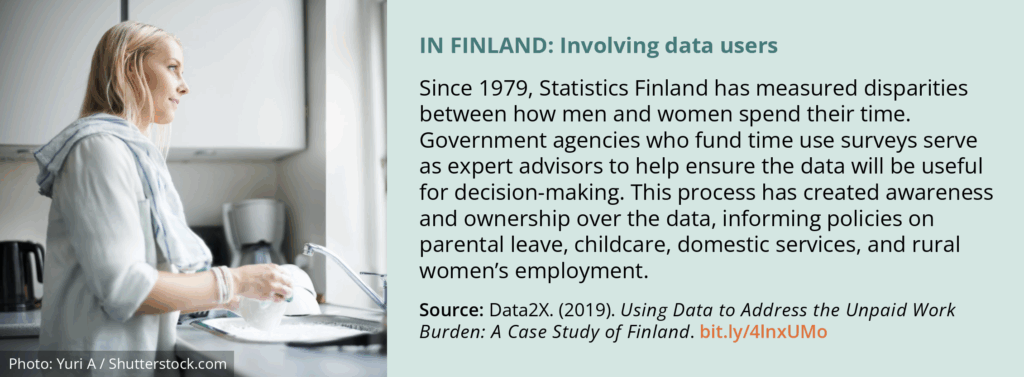
For users to access and work with gender data, the data must be open for use. This means they must be available in open formats, include metadata, and have open terms of use. An open format means a user can download the data in machine-readable formats and process it using non-proprietary software. Metadata provide definitions and other details to inform their analysis or interpretation. An open terms of use or data license provides permission to freely use the data.
Gender data are less open than other types of data, such as economic or financial data. A lot of gender data are only published in stand-alone reports, and we don’t find them widely integrated or mainstreamed into national data portals.
Policies and Practice: A crucial combination
Policies promoting gender data use must be paired with practices that create a culture of gender data use. Policies can include everything from statistical laws that mandate support for use to data sharing agreements or staff training requirements.
Putting these policies into practice will be essential. There are opportunities for all stakeholders to promote a culture of data use. Although the mandate of data producers and data stewards have often focused on production, modern statistical systems include promoting use as part of their mandate. Even in the absence of official policies to promote gender data, anyone can work to create a culture of gender data use. And once practices are in place, it will be all the more feasible to cement them through official policies.

Capacity Building: Empowering use for uptake and impact
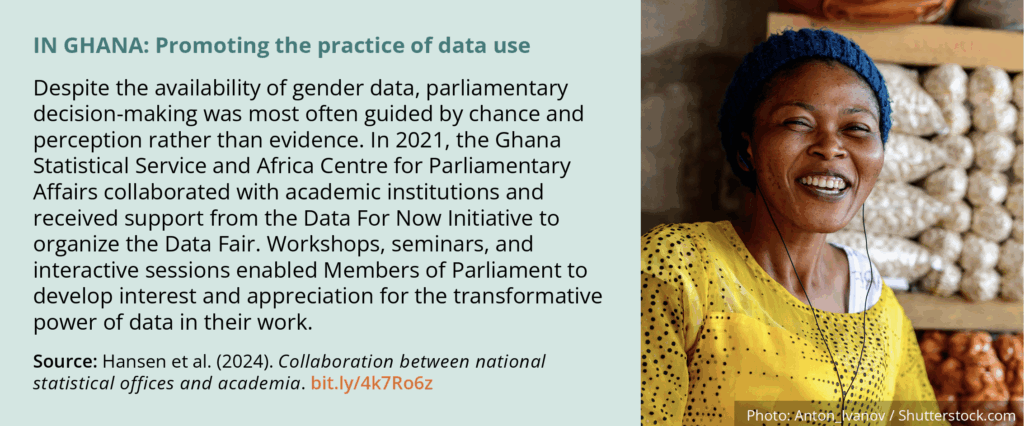
Capacity building involves a broad spectrum of activities. Not only must gender data users know how to use data, but they must also understand the gender issues reflected in the data. Gender data producers and expert advocates can implement training that addresses knowledge gaps in how to use gender data from different sources and methods.
Enabling gender data use can require taking innovative approaches. It can involve exploring opportunities to harness new innovations in the field of artificial intelligence (AI). It can mean knowing how to create an app to connect other users to the data or to write a compelling news article sharing data-driven insights.
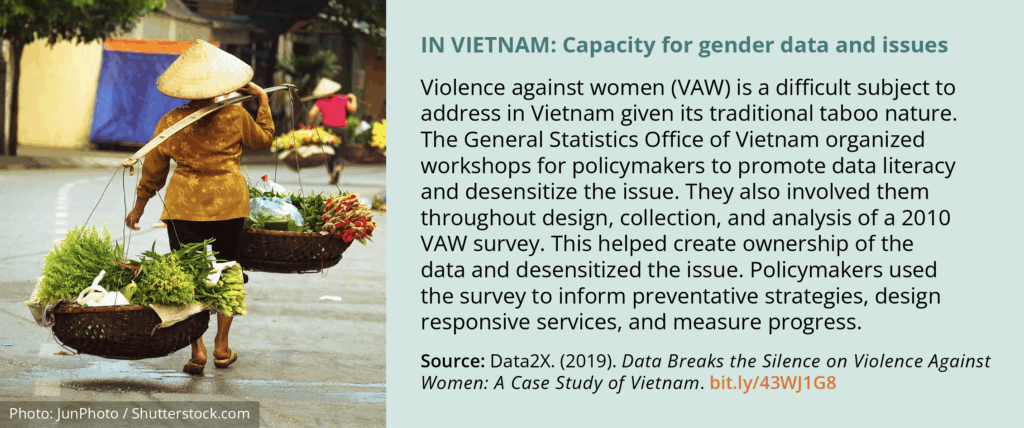

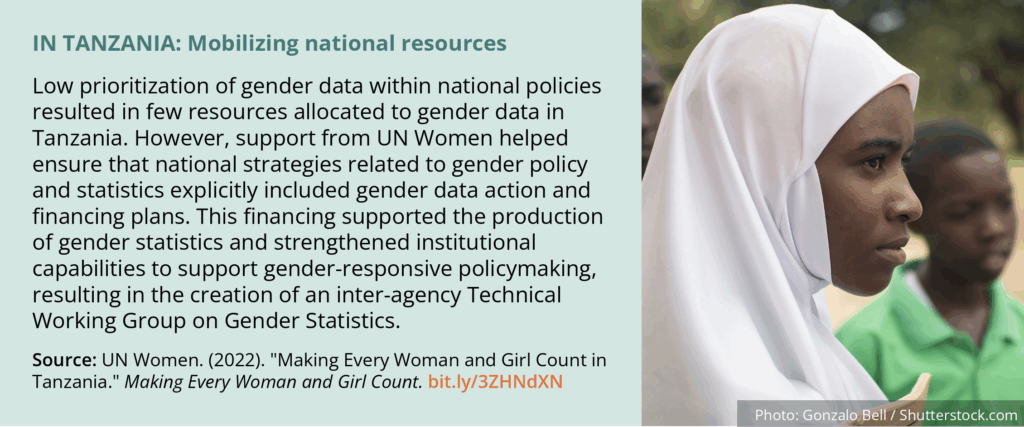
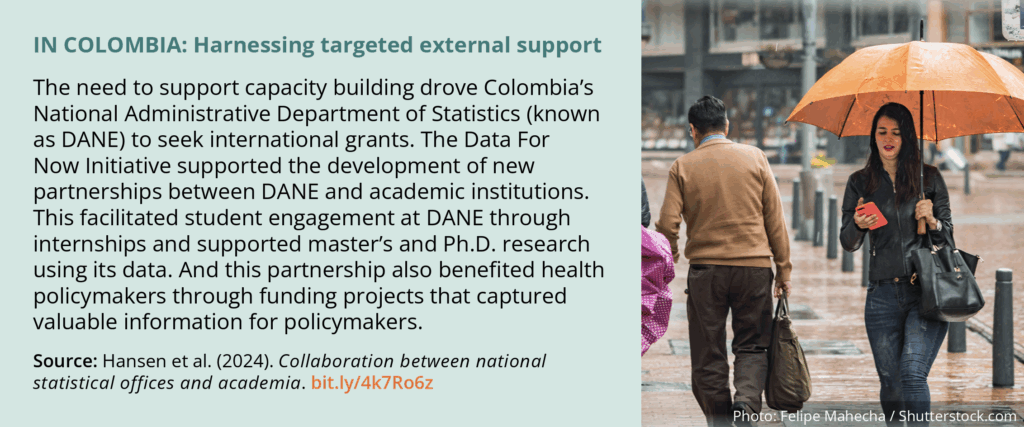
Funding: Mobilizing internal and external resources
Promoting gender data use requires sustainable funding from internal sources and targeted external support. It is necessary to budget for data use just as much as data production or methodological work. Its importance must be reflected in budget allocations. The impacts from data use will demonstrate value and further justify future investments.
Despite the pressing need, current funding remains insufficient. Data2X and Open Data Watch estimate an annual gap of $500 million through 2030 to support core gender data systems. More diverse and sustainable funding is needed to support systems for the production and use of gender data.
Call to Action: What can we do?
Promoting gender data use requires commitment and action from the full array of stakeholders. Data producers, decision-makers, advocates, and donors must work together to achieve the full impact of gender data. Their efforts will overlap and complement each other to transform current practices and fuel a virtuous cycle of gender data use.
The examples this brief has shared from among countless others highlight the opportunities to enable gender data use:
- Engage with gender data users, from policymakers to citizens, to produce usable gender data that are fit for purpose and open for use.
- Establish policies to promote gender data use and work to ensure these policies are put into practice.
- Build capacity for working with data and understanding gender issues, harness innovation, and build other necessary skills to use gender data.
- Mobilize sustainable funding from internal sources and targeted external funding to drive the full scope of efforts to support gender data use.
This brief was prepared by Open Data Watch and Data2X. Join us in advocacy to mobilize support for gender data use that will impact the lives of women and girls.